
Lesson 02: What is Computer Vision?
 Viet-Anh Nguyen
Computer vision is a field of artificial intelligence that involves the development of algorithms and techniques to enable machines to interpret and understand visual data from the world around us. The goal of computer vision is to create machines that can see, analyze, and understand the visual world as humans do.
Real-World Applications
Computer vision powers a remarkable range of products and systems today:
- Object recognition and tracking — Identify and follow objects across video frames. Used in retail analytics, sports broadcasting, and security.
- Autonomous vehicles — Self-driving cars use cameras + CV to detect lanes, pedestrians, signs, and other vehicles in real time.
- Medical imaging — Detect tumors in CT scans, segment tissue in microscopy, classify skin lesions from photos.
- Robotics — Enable robots to navigate environments, pick and place objects, and interact with the physical world.
- Augmented reality — Overlay digital content on real scenes by understanding the geometry and features of the camera view.
- Quality control — Automatically detect defects in manufactured parts on factory production lines.
Seeing It in Action
Here is a minimal end-to-end example of what this course leads to — detecting objects in a real street scene using YOLO26 (the latest model as of 2026):
from ultralytics import YOLO
import urllib.request

# Download the standard Ultralytics test image
urllib.request.urlretrieve(
    "https://ultralytics.com/images/bus.jpg", "bus.jpg"
)

# Load the latest model and run inference
model = YOLO("yolo26n.pt")  # downloads ~5 MB on first run
results = model("bus.jpg")
results[0].show()  # opens a window with annotated detections

# Expected output:
# Detected: 6 × person, 1 × bus, 2 × car
# Inference time: ~15 ms on CPU (YOLO26n)
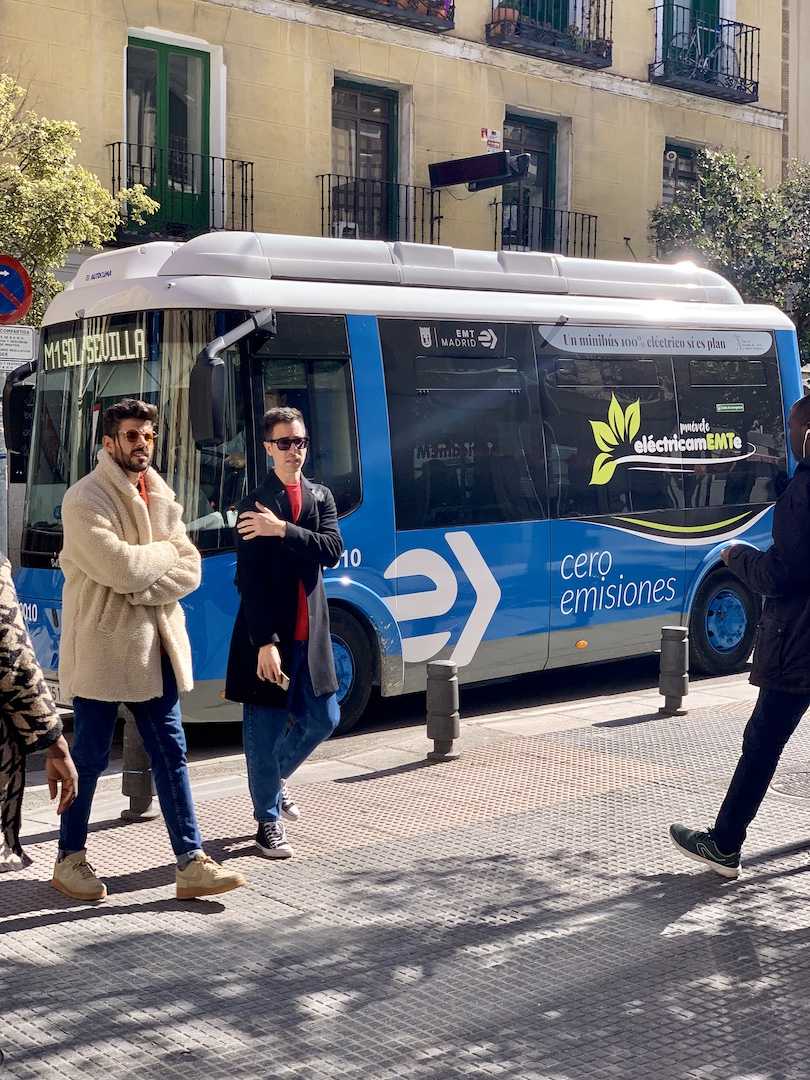
By the end of this course you will understand every layer of that pipeline — from pixel arrays to deep learning inference.
How Machines "See"
Humans perceive images holistically. Computers see an image as a 3D array of numbers:
import cv2
import urllib.request
import numpy as np

urllib.request.urlretrieve("https://ultralytics.com/images/bus.jpg", "bus.jpg")
img = cv2.imread("bus.jpg")

print(f"Shape: {img.shape}")         # (height, width, channels) e.g. (1080, 810, 3)
print(f"Dtype: {img.dtype}")         # uint8
print(f"Pixel at (0,0): {img[0,0]}") # [B, G, R] values e.g. [143, 152, 160]
print(f"Min/Max: {img.min()}/{img.max()}") # 0 / 255
Everything in computer vision is arithmetic on these arrays. Understanding that is the foundation of the whole field.
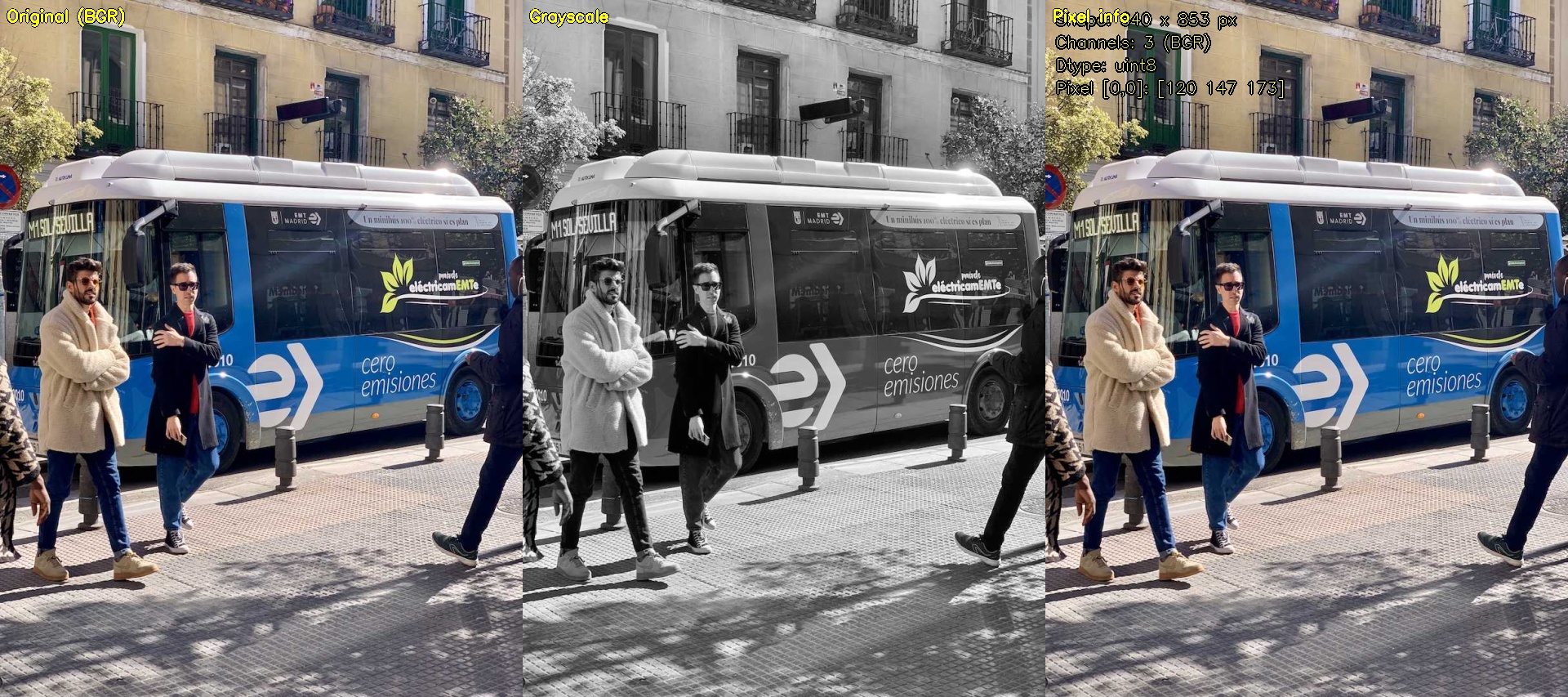
In order to create effective computer vision systems, developers use image processing, machine learning, and deep learning — techniques you will learn hands-on throughout this course.