
Computer Vision
Explore the latest content and insights.
GPU có sẵn mà không dùng: bốn lỗi âm thầm khi huấn luyện trên máy người dùng
Huấn luyện đang dần quay về máy của người dùng, nơi phần cứng nằm ngoài tầm kiểm soát của nhà phát triển. Tôi đã để GPU trên máy Mac bị bỏ không suốt hai năm vì ứng dụng vẫn chạy được, chỉ là chậm. Khi bật Metal và đo đạc nghiêm túc, tôi phát hiện bốn lỗi hiệu năng không hề báo lỗi: is_bf16_supported() nhận nhầm khả năng phần cứng, gradient scaler âm thầm bỏ qua optimizer step, 16-bit chậm hơn 32-bit trên Apple Silicon, và giao diện báo dùng GPU trong khi mô hình thực tế chạy trên CPU.
The GPU Was Already There: Four Silent Bugs in On-Device Training
Training is moving back onto the machines people own, and those machines are not a fleet you control. Apple GPU support sat on my plan for two years because nothing looked broken; the runs finished, they were just slower. Turning Metal on was worth 1.7x to 4.2x per epoch on the one M1 I own, and much less end to end. The measuring is what found the real bugs, three of which never raised anything: is_bf16_supported() answering True on a card that only emulates it, a gradient scaler silently dropping optimiser steps and halving a mAP, and 16-bit being slower than 32-bit on Apple Silicon even though everything works.
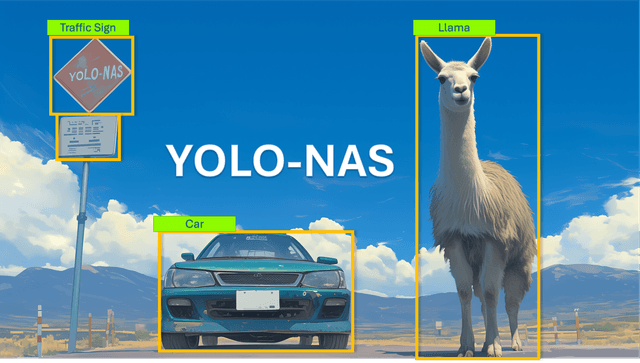
Review YOLO-NAS - Search for a better YOLO
A short review of advancements in YOLO-NAS - a new YOLO architecture born from Neural Architecture Search.
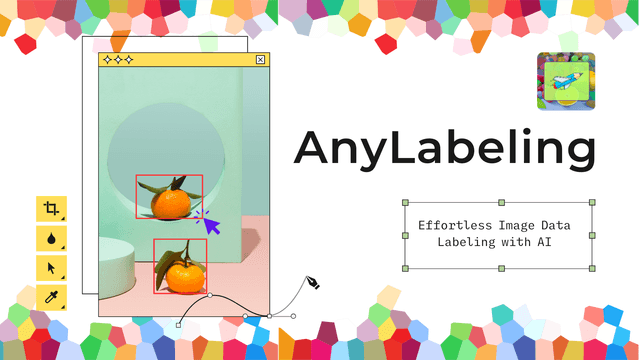
AnyLabeling - gán nhãn ảnh thông minh với Segment Anything và YOLO
Câu chuyện xây dựng AnyLabeling trên nền Labelme: từ việc tích hợp Segment Anything và YOLO vào quy trình gán nhãn cho đến hỗ trợ dữ liệu OCR.
AnyLabeling - Smart image labeling with Segment Anything and YOLO
How I built AnyLabeling on top of Labelme: why the tool needed to exist, how Segment Anything and YOLO inference is wired into the labeling loop, and how text OCR labeling works.
![[MOOC] Autoware Course - Lecture 1 - Setup the environment](/_next/image?url=%2Fposts-data%2Fnotes%2Fautoware-course%2Flecture1%2Fthumbnail.jpeg&w=640&q=75&dpl=dpl_GZWPRp4PtzX2dYP7sDqWqsmiS1B4)
[MOOC] Autoware Course - Lecture 1 - Setup the environment
Lecture 1 notes from the Apex.AI Autoware course: getting the development environment up with Docker, ROS 2, Terminator, and Autoware.Auto, the errors I hit along the way, and how I fixed them.
![[MOOC] Apollo Lessons on Self-Driving Cars](/_next/image?url=%2Fposts-data%2Fnotes%2Fapollo-self-driving-car-course%2Fapollo-series-cover.png&w=640&q=75&dpl=dpl_GZWPRp4PtzX2dYP7sDqWqsmiS1B4)
[MOOC] Apollo Lessons on Self-Driving Cars
Course notes from Udacity's Self-Driving Fundamentals, featuring Apollo. What the seven lessons cover, from HD maps and localization through perception, prediction, planning, and control. Every diagram in the series is redrawn.
[MOOC] Apollo Lesson 7: Control
Lesson 7: steering, throttle, and brake that follow the planned trajectory while keeping passengers comfortable. PID, LQR, and model predictive control, with the tradeoffs of each.
[MOOC] Apollo Lesson 6: Planning
Lesson 6: turning a map, a position, and a set of predictions into a trajectory. Routing the world as a graph, Frenet coordinates, path-velocity decoupled planning, and reading an ST graph.
[MOOC] Apollo Lesson 5: Prediction
Lesson 5: predicting what everything else on the road will do next. Model-based against data-driven approaches, lane-sequence prediction, and using an RNN to produce a trajectory for each tracked object.
[MOOC] Apollo Lesson 4: Perception
Lesson 4: turning camera, LiDAR, and radar data into objects. Classification, detection, and segmentation, what each sensor is good and bad at, and why Apollo fuses them rather than trusting one.
[MOOC] Apollo Lesson 3: Localization
Lesson 3: how the vehicle places itself to single-digit-centimetre accuracy. Inertial navigation, GNSS and IMU, RTK, LiDAR and visual localization, and the multi-sensor fusion Apollo settles on.
[MOOC] Apollo Lesson 2: HD Maps
Lesson 2: why a self-driving car needs an HD map rather than the one on your phone. Centimetre precision, lane markings and a 3D road network, how localization rides on top of the map, and how the maps get built.
[MOOC] Apollo Lesson 1: SDC Fundamentals
Lesson 1: what actually makes up a self-driving car. The six levels of autonomy, how a machine driver differs from a human one, and the three layers of the Apollo platform: hardware, the open software stack, and the cloud services.
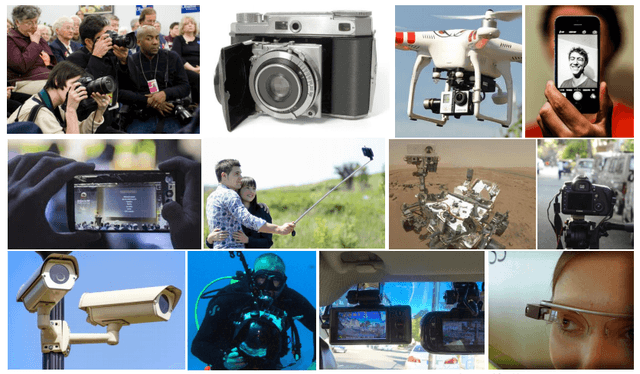
Thị giác máy tính và những gì cần học để bắt đầu
Giới thiệu ngành thị giác máy tính, các ứng dụng thực tế và lộ trình kiến thức cần học để bắt đầu làm việc trong lĩnh vực này.